
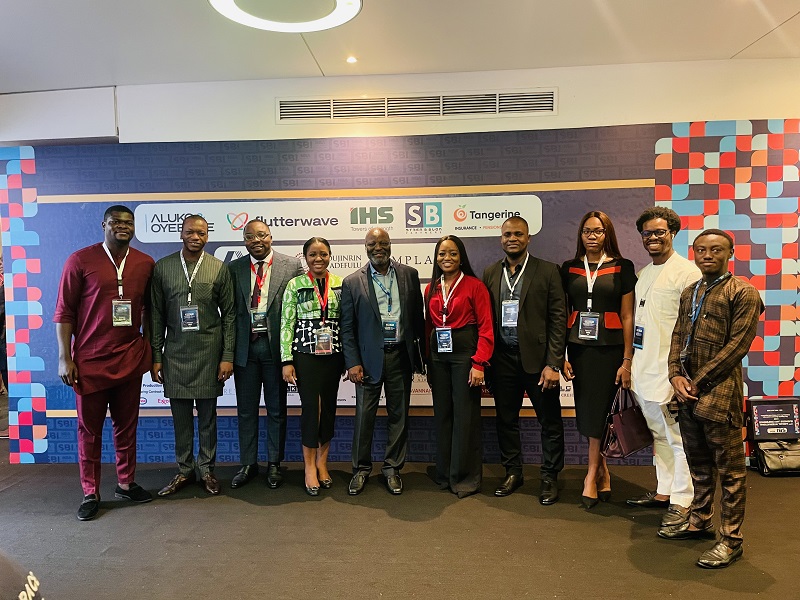
AELEX was a proud sponsor of the 17th Annual International Business Law Conference of the NBA Section on Business Law (NBA-SBL), which held from the 5th to 7th of July 2023. Held at Eko Hotels & Suites, the theme of the Conference was ‘The Nigerian Business Landscape: Priorities for Law, Policy and Regulation’.
As Nigeria experiences the early days of a new administration, the aim of the conference was to trigger conversations on how law can be effectively deployed to facilitate the needed growth and development across various sectors of the Nigerian economy. As such, deliberations across the conference were spread across seven plenary sessions and six breakout sessions.
AELEX co-sponsored one of these breakout sessions titled, ‘Challenges and Opportunities to Agricultural Development in Nigeria: Technology and Policy Solutions’. Held on July 7th, this breakout session focused on the critical role agriculture plays in Nigeria’s economy, employing a significant section of the population and contributing to the country’s GDP. The panel considered issues affecting the sector ranging from lack of adequate knowledge on economics of production, the aged farming population, limited access to technology, insufficient funding, to name a few. The session also considered the solutions ranging from providing education to participants in the agro-space, improving agro-infrastructure, adopting technology, and domestic investment in the entire value chain.
AELEX was also represented in another breakout session, by Mr Akin Agunbiade, an Associate with the firm. The title of the session was, ‘The Imperatives of Creative Rights in a Digitalised Industry with a Global Outlook’. Other panelists on this session were Jude Abaga (MI), CEO, Incredible Music; Mr Christian Aniukwu, Managing Partner, Stren and Blan; Mr Mena Ajakpovi, Partner, Udo-Udoma & Belo-Osagie; Mrs Lynda Alphaeus, Director, Nigerian Copyright Commission; while it was moderated by Mr. Paul Okeugo, President/Founder, Chocolate City Group.
This panel considered the potentials of the creative industry, Nigeria’s second largest employer of labour, which had yet to reach its full potential. The new Copyright Act 2022 was at the centre of discussions, and the new protections it provided, providing stronger penalties for copyright infringement, and supporting the use of technological protection measures. Gaps in the legislation were however highlighted, in terms of tackling the increased use of AI-generated works. The need for additional regulatory guidance was brought to the fore, to aid creatives in deciding how best to use AI tools in developing works for the Nigerian market. It was also mentioned that the Nigerian Copyright Commission was in the process of updating some of its regulations. The proposed Creative Industry Development Bill and the incentives it sought to extend to creatives was also mentioned.
A plenary session was moderated by Mr Soji Awogbade, FEI, Senior Partner at AELEX. This session was titled, ‘Harnessing the Economic Potential of AfCFTA in Nigeria: Regulatory and Institutional Frameworks Required for Implementation’. Members of this panel were Mr Tola Onayemi, CEO, Norebase; Mr Mitchell Aghatise, Senior Associate, Olaniwun Ajayi LP; Ms Eberechukwu Ezike, Associate, G. Elias & Co; and Dr Enga Kameni, Senior Manager, Legal Services, African Export-Import Bank.
This panel considered the progress made thus far since the AfCFTA came into effect, obstacles and the opportunities. The panelists considered the consistencies between the AfCFTA and the World Trade Organisation’s (WTO) rules of origin. The dampened optimism in larger economies like South Africa, Nigeria, and Egypt towards AfCFTA operationalization was noted, as most of their export GDP came from non-African countries. There was likely going to be a short-term hit by ratifying all the AfCFTA articles, but in the long-term, there would be significant growth attributable to increased, tariff-free intra-African trade.
Inadequacies around infrastructure were also highlighted as one of the major drags behind African countries not hastening up in implementing their obligations, to target exports at each other, rather than Europe for instance.
With the curtain drawn for the 2023 edition of the 17th Annual International Business Law Conference, the conversations brought up in the course of the conference are timely, and provide a compass on how law can be an effective tool for delivering the much-needed reforms for Nigeria’s economic recovery and development.